
The Complete Guide to Branded Name Badges in Australia for Events and Businesses
Everything Australian businesses and event planners need to know about branded name badges — materials, styles, printing methods, and ordering tips.

Written by
Amira Walsh
Stationery & Office
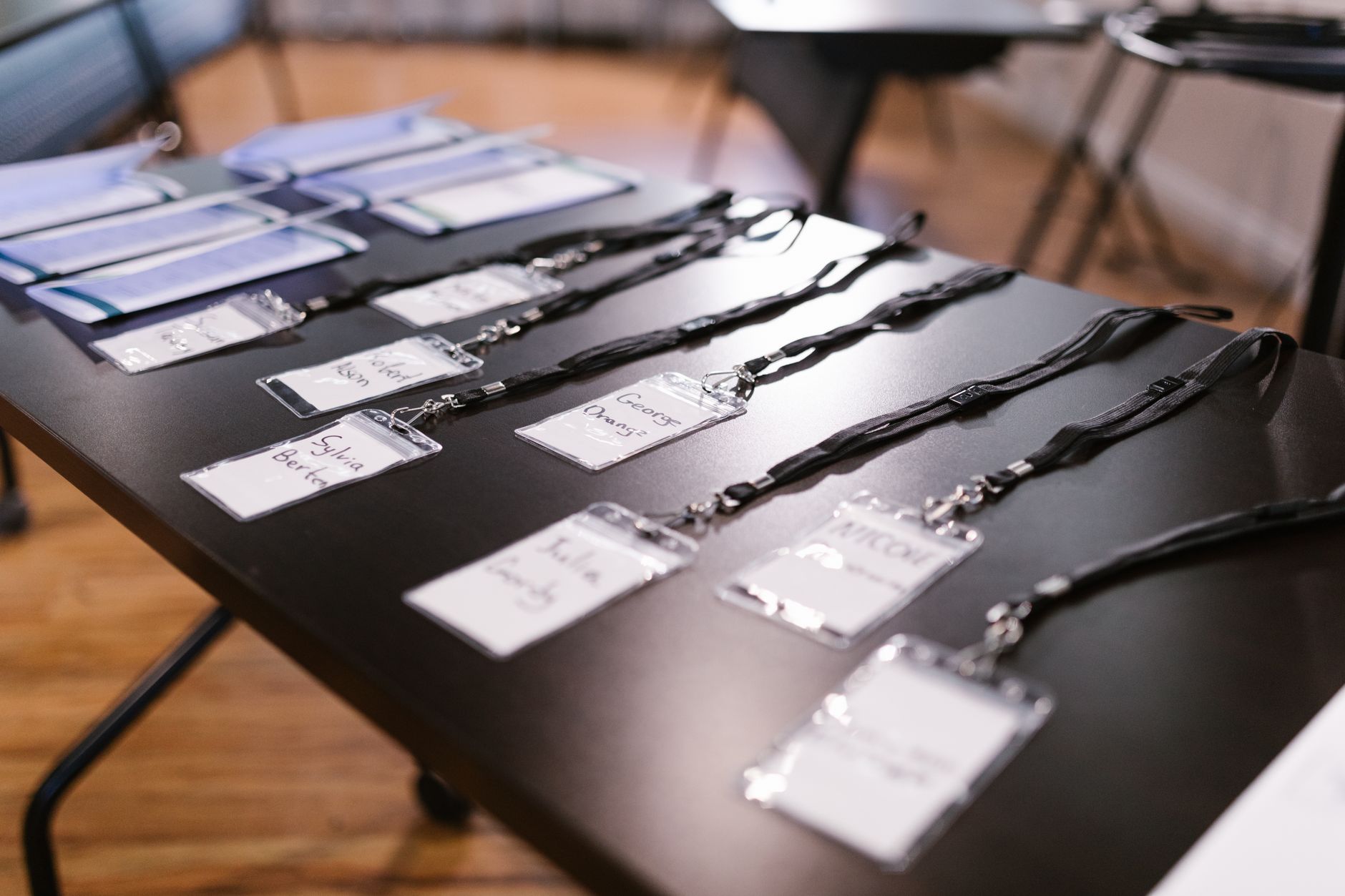
Walking into a conference, trade show, or corporate event, the humble name badge might seem like a minor detail — but it’s often the very first branded touchpoint a guest, delegate, or client encounters. For Australian businesses and event organisers, branded name badges are far more than a practical identification tool. They’re a reflection of your organisation’s professionalism, attention to detail, and brand identity. Getting them right can elevate the entire experience of your event or workplace, while getting them wrong can leave a surprisingly poor first impression. This guide covers everything you need to know about ordering branded name badges in Australia — from materials and decoration methods to budgeting, turnaround times, and practical ordering tips.
Why Branded Name Badges Matter More Than You Think
It’s easy to underestimate the impact of a well-designed name badge. But consider this: at a Sydney trade show or a Melbourne corporate conference, your badge is on display every time someone looks at the person wearing it. It communicates your brand colours, your logo, and your organisation’s sense of quality — all in a small rectangular format.
Beyond aesthetics, name badges serve a very practical function. They facilitate networking, help staff identify themselves to customers, ensure security at gated events, and create a sense of cohesion among teams. For schools, healthcare organisations, government departments, and real estate agencies across Australia, name badges are often a daily necessity rather than an event-specific accessory.
Well-branded badges also tie neatly into your broader merchandise strategy. If you’re ordering lanyards, branded stationery, or conference satchels alongside your badges, consistent branding across all items creates a polished, unified impression. You can read more about how promotional products influence purchasing decisions and perception in our overview of promotional products and consumer behaviour.
Types of Branded Name Badges Available in Australia
One of the first decisions you’ll need to make is which type of name badge suits your requirements. The Australian market offers a wide variety of options, and your choice will depend on your budget, event type, intended use, and how long you need the badges to last.
Reusable Name Badge Holders
These are among the most popular options for conferences, expos, and corporate events. A rigid plastic or metal holder is paired with a printed insert card, allowing you to swap the insert between events or update names without reprinting the entire badge. They’re cost-effective for organisations that run recurring events throughout the year.
For a Brisbane industry association hosting quarterly networking evenings, for example, a set of reusable rigid badge holders with fresh inserts each time is a smart, sustainable choice. When combined with a well-designed insert template, the result looks consistently professional event after event.
Printed Cardstock Name Badges
Cardstock badges are the go-to for single-use events, large-scale conferences, and situations where personalisation per attendee is required. These are typically digitally printed with variable data, meaning each badge can feature a different name, title, and even a custom QR code — all printed in a single production run.
A Perth university hosting a multi-day graduate conference, for instance, might order several hundred individual cardstock badges with each delegate’s name, faculty, and a QR code linking to their research profile. These work particularly well when housed in badge holders with lanyards or clip attachments.
Metal and Acrylic Name Badges
For permanent workplace use, metal and acrylic name badges represent the premium end of the market. These are commonly used in retail, hospitality, healthcare, real estate, and corporate environments where staff wear their badge every day as part of their uniform.
Metal badges — typically aluminium or brass — can be laser engraved or printed with your logo, the staff member’s name, and their role. Acrylic badges offer a modern, clean aesthetic and can accommodate full-colour printing. Both options are durable and project a high-quality brand image. A Gold Coast real estate agency kitting out a team of 40 agents with engraved metal badges creates a polished, authoritative impression when meeting clients. If you’re interested in how laser engraving and other cutting techniques apply to promotional products more broadly, our guide to vinyl cutting for promotional products provides helpful context on precision decoration methods.
Magnetic vs. Pin Fastening
The attachment mechanism matters more than many buyers initially realise. Pin-back badges are traditional and very secure, but they can damage delicate fabrics — a concern for staff in healthcare or hospitality wearing neat uniforms. Magnetic fastening badges are increasingly popular because they attach firmly without piercing fabric, making them ideal for everyday workplace use.
Decoration Methods for Branded Name Badges
Understanding how your logo and design will be applied to a name badge helps you make better decisions about quality, cost, and suitability.
Digital printing is widely used for cardstock inserts and full-colour printed badges. It allows for photographic-quality reproduction of logos, gradients, and complex designs — ideal when colour accuracy is critical.
Laser engraving is the preferred method for metal and premium acrylic badges. It produces a crisp, permanent result that won’t fade or peel over time. This is particularly relevant for daily-wear badges in professional environments. The engraving process is similar in many respects to what’s covered in our embroidery digitisation process guide — both involve converting your artwork into a format that a machine can faithfully reproduce.
Pad printing is another common method, particularly for simple one or two-colour logo applications on rigid plastic badge holders.
Foil stamping can add a premium metallic finish to name badge inserts or holders — great for luxury hospitality brands, awards nights, and gala events. Our foil stamping temperature guide for branded stationery goes into detail on how this process works and when it’s most appropriate.
Practical Ordering Tips for Branded Name Badges in Australia
Ordering name badges involves more moving parts than many buyers expect. Here are the practical considerations that will help your project run smoothly.
Know Your Quantities and MOQs
Minimum order quantities (MOQs) vary significantly depending on the badge type. Printed cardstock badges often have low MOQs — sometimes as few as 25 or 50 units — making them accessible for smaller events. Metal and premium acrylic badges typically have higher MOQs, often starting at 50 to 100 units, because the setup costs for engraving and precision manufacturing are higher.
For large-scale events like trade shows or corporate conferences, ordering in bulk reduces the per-unit cost substantially. An Adelaide government department ordering 300 badges for a state conference will pay considerably less per badge than an organisation ordering 30.
Allow Adequate Lead Time
Standard production and delivery for branded name badges in Australia typically runs between 7 and 15 business days, depending on the badge type, quantity, decoration method, and whether you’re ordering from a supplier in your state. If you’re in Darwin or Hobart and ordering from an interstate supplier, factor in additional freight time.
Rush orders are often available for an additional fee, but the safest approach is to allow at least three weeks from artwork approval to delivery, particularly for personalised badges with variable data. Variable data printing — where every badge is unique — requires additional file preparation time.
Prepare Your Artwork Correctly
Suppliers will typically request artwork files in vector format (AI, EPS, or PDF) for logo reproduction. If your artwork contains specific brand colours, provide your PMS (Pantone Matching System) colour codes to ensure accurate colour matching across all your branded items.
For variable data badge orders (where each badge has a different name), you’ll usually submit a spreadsheet with the required information — full name, title, organisation, and any other fields. Make sure this list is proofed carefully before submission, as corrections after printing add cost and delay.
Consider Sustainability Options
Eco-conscious organisations across Australia are increasingly requesting sustainable name badge options. Recycled cardstock inserts, biodegradable badge holders, and reusable rigid holders that reduce single-use waste are all now widely available. For events with a strong sustainability focus, this is worth exploring — and it aligns with a broader trend in how Australian organisations are thinking about their eco-friendly packaging and merchandise choices.
Using Name Badges as Part of a Broader Event Merchandise Strategy
Name badges rarely exist in isolation. For most events, they’re one element of a broader delegate experience that includes lanyards, tote bags, branded stationery, and promotional giveaways. Thinking about all of these elements together — rather than ordering them piecemeal — leads to better brand cohesion and often better pricing through consolidated orders.
For welcome events and orientation days, name badges pair naturally with branded welcome packs. Our guide to promotional giveaways for welcome events in Australia explores how organisations can create a memorable first impression through thoughtful merchandise curation.
For festivals and large outdoor events, you might combine printed name badges or wristbands with a wider suite of branded items. See our roundup of promotional giveaways for festivals in Australia for ideas on what works well in outdoor event settings.
If your event includes award presentations or recognition ceremonies, consider pairing your name badges with premium branded items like personalised award plaques for industry recognition events to elevate the experience for honourees.
For organisations building out a full corporate gifting and merchandise suite, our guide to top-rated corporate gifts in Australia and our list of unique corporate gifting ideas provide excellent inspiration beyond the event context.
Budgeting for Branded Name Badges in Australia
Budget ranges for name badges vary enormously. Here’s a practical breakdown to set expectations:
- Basic printed cardstock inserts (without holders): from approximately $0.50–$2.00 per unit at volume
- Reusable rigid holders with printed inserts: from approximately $3.00–$8.00 per unit depending on holder quality
- Printed acrylic badges (full colour, magnetic backing): from approximately $6.00–$15.00 per unit
- Laser-engraved metal badges (aluminium or brass, magnetic backing): from approximately $12.00–$25.00 per unit
Setup fees may apply for screen printing or laser engraving setups. Always request a detailed quote that itemises product cost, setup fees, and freight.
Conclusion: Key Takeaways for Ordering Branded Name Badges in Australia
Branded name badges in Australia represent a genuinely versatile category — spanning everything from simple cardstock event inserts to premium engraved metal badges for daily workplace use. Regardless of your sector or scale, getting the details right will reflect positively on your organisation every time they’re worn.
Here are the key points to carry forward:
- Match the badge type to your use case — reusable holders for recurring events, cardstock for single-use occasions, and metal or acrylic for permanent workplace wear.
- Understand your decoration method — digital printing suits colour-rich designs; laser engraving delivers a premium, durable finish for long-term use.
- Plan your lead time carefully — allow at least three weeks for personalised or variable data badge orders, especially during peak event seasons.
- Prepare artwork correctly — supply vector files and PMS colour codes to ensure consistent, accurate brand reproduction.
- Think holistically — name badges are most effective when they form part of a cohesive branded merchandise suite that extends across your entire event or workplace experience.
Whether you’re equipping a team of five in a Canberra government office or coordinating 500 delegate badges for a Brisbane conference, taking a considered approach to your branded name badge order will pay dividends in the impression you make.